Essential Guide: Automated External Defibrillators Explained
Business 0 CommentsWarning: Trying to access array offset on value of type null in /home/17007052/domain/public_html/wp-content/themes/simple-east/content.php on line 37
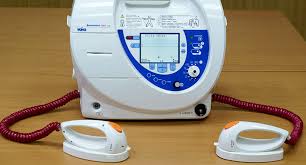
Automated external defibrillators (AEDs) have revolutionized the field of emergency medical care by providing a critical lifeline to individuals experiencing sudden cardiac arrest. These portable electronic devices are designed to automatically diagnose and treat life-threatening cardiac conditions, such as arrhythmias, by delivering a controlled electric shock to restore a regular heartbeat. With their ease of use and ability to rapidly deliver life-saving interventions, AEDs have become indispensable tools in both professional healthcare settings and public spaces.
Recognizable by their distinctive bright colors and clear instructions, AEDs are now commonly found in airports, schools, sports arenas, shopping centers, and other public locations. The accessibility and simplicity of these devices empower bystanders to rapidly respond to cardiac emergencies, even without prior medical training. By facilitating early defibrillation, AEDs greatly increase a person’s chances of survival, as every minute without intervention decreases the likelihood of recovery by 7-10%. Consequently, widespread deployment of AEDs has played a vital role in improving cardiac arrest survival rates and empowering individuals and communities to take an active role in saving lives.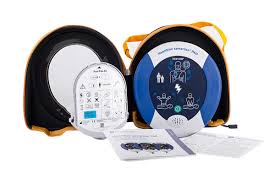
What is an Automated External Defibrillator (AED)?
An Automated External Defibrillator (AED) is a portable electronic device used to analyze and treat life-threatening cardiac arrhythmias, such as ventricular fibrillation and ventricular tachycardia. It is designed to deliver an electric shock to the heart, helping to restore a normal rhythm. AEDs are commonly found in public places, such as airports, schools, and shopping malls, as they can be operated by non-medical professionals with minimal training. They play a vital role in saving lives during sudden cardiac emergencies. For more information on AEDs and their importance, click for in-depth information.
Why are AEDs important?
AEDs are crucial in the event of sudden cardiac arrest as they provide immediate treatment, increasing the likelihood of survival. According to the American Heart Association, using an AED within the first few minutes of cardiac arrest can significantly improve the chances of a positive outcome. Prompt use of an AED can help restore a normal heart rhythm and prevent irreversible damage to vital organs. With their user-friendly design and clear instructions, AEDs empower bystanders to take action and potentially save lives. Understanding the importance of AEDs and knowing how to use them properly can make a remarkable difference in emergency situations. To learn more about AEDs and their benefits, click for in-depth information.
In conclusion, automated external defibrillators (AEDs) have revolutionized emergency medical care by providing rapid, life-saving interventions for individuals experiencing sudden cardiac arrest. Their accessibility and ease of use have made them indispensable tools in both professional healthcare settings and public spaces. The widespread deployment of AEDs in airports, schools, sports arenas, and other locations has empowered bystanders to take an active role in saving lives, significantly increasing the chances of survival for those in cardiac emergencies. By delivering controlled electric shocks to restore a regular heartbeat, AEDs play a vital role in improving cardiac arrest survival rates and preventing irreversible damage to vital organs. Understanding the importance of AEDs and their proper use can make a remarkable difference in emergency situations.
Warning: Trying to access array offset on value of type null in /home/17007052/domain/public_html/wp-content/themes/simple-east/content.php on line 74